Class 12 Economics
Complete Chapter Hub
19 chapters. Notes, MCQs and Quiz for every chapter — 100% aligned with CBSE Code 030, Session 2026–27. Part A (Macro) · Part B (Indian Economic Development).
Part A — Introductory Macro Economics
Chapters 1–12 | Introduction · Basic Concepts · National Income · Methods of NI · Money · Banking · AD & AS · Short Run Equilibrium · Deficient & Excess Demand · Government Budget · Foreign Exchange · Balance of Payments
Part B — Indian Economic Development
Chapters 1–7 | Eve of Independence · 1950–1990 · LPG · Human Capital · Rural Development · Employment · Environment & Sustainable Development
Want Live Economics Classes?
Join Toppers Tribe Batch 2027 — live classes via Google Meet, Mon–Sat, starting 15 July 2026. Every chapter taught live with doubt solving.
Why Use This Page
Everything in One Place — Chapter by Chapter
Each chapter page has three sections — Notes, MCQs and Quiz — so you can read, practise and test yourself without switching another page.
100% CBSE Syllabus Aligned
Every topic mapped to CBSE Code 030, Session 2026–27 — nothing extra, nothing missing from all 19 chapters.
Notes Written for Understanding
Concepts explained the way a teacher would in class — focused on clarity and application, not rote learning.
MCQs in Board Exam Pattern
20+ solved MCQs per chapter with green-highlighted answers and explanations — exam-ready practice.
100% Free — No Paywall
All notes, MCQs and quizzes are completely free. No sign-up required. Start studying right now.
Want to Score 95%+ in Economics?
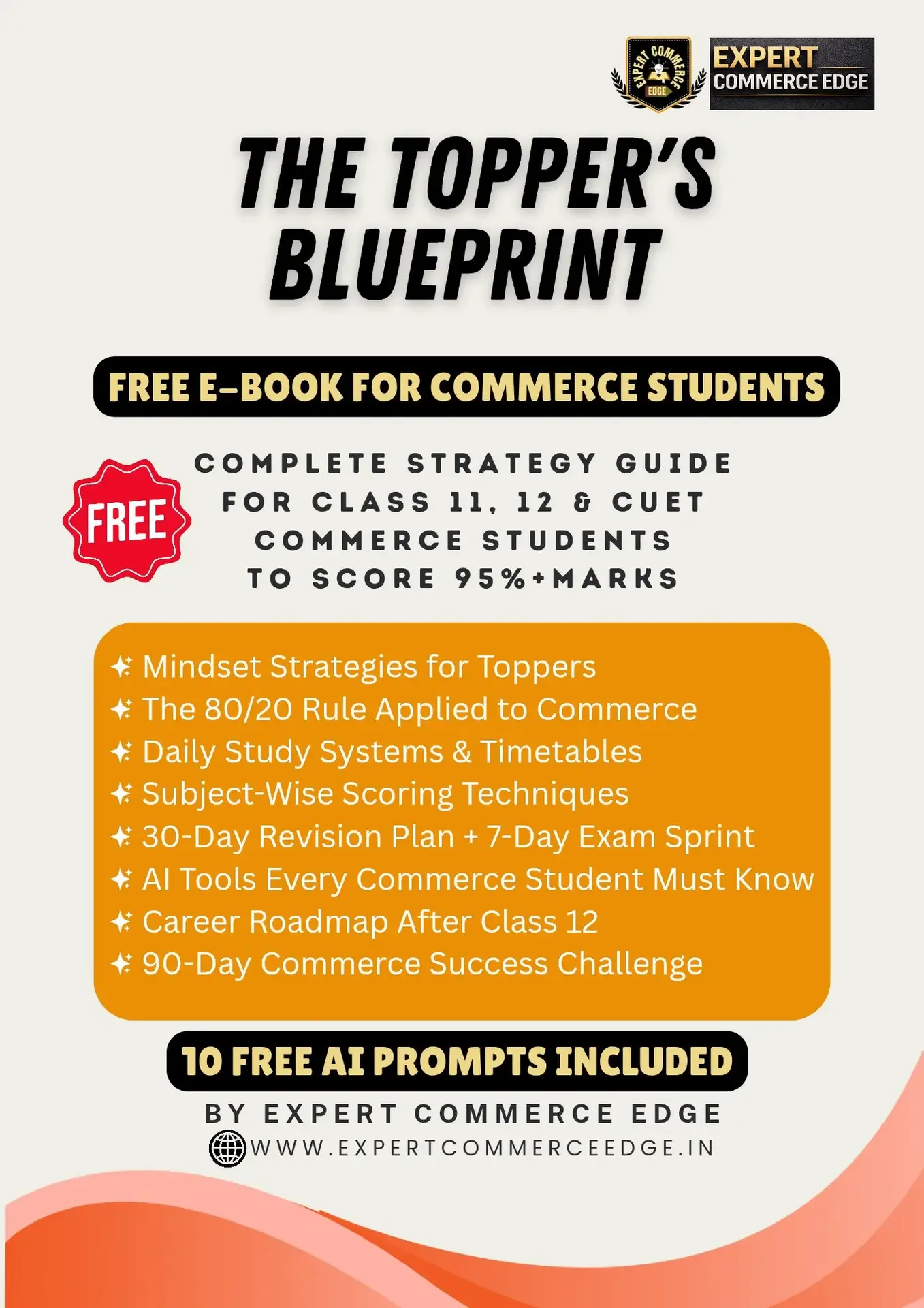
Download "The Topper's Blueprint" — smart-study system, revision strategies & 10 free AI prompts for Class 11, 12 & CUET Commerce students.
Class 12 Economics — Notes, MCQs & Quizzes for All 19 Chapters
Class 12 Economics (CBSE Code 030, Session 2026–27) is divided into two parts. Part A — Introductory Macro Economics (Chapters 1–12) covers Introduction (Ch 1), Basic Concepts of Macroeconomics (Ch 2), National Income (Ch 3), Methods of National Income (Ch 4), Money (Ch 5), Banking (Ch 6), Aggregate Demand and Aggregate Supply (Ch 7), Short Run Equilibrium Output (Ch 8), Deficient Demand and Excess Demand (Ch 9), Government Budget and Economy (Ch 10), Foreign Exchange Rate (Ch 11), and Balance of Payments (Ch 12).
Part B — Indian Economic Development (Chapters 1–7) covers Indian Economy on the Eve of Independence (Ch 1), Indian Economy 1950–1990 (Ch 2), Liberalisation, Privatisation and Globalisation (Ch 3), Human Capital Formation in India (Ch 4), Rural Development (Ch 5), Employment: Growth, Informalisation and Other Issues (Ch 6), and Environment and Sustainable Development (Ch 7). At Expert Commerce Edge, every chapter is available as a single page with Notes, MCQs and Quiz — completely free.
Whether you're preparing for your board exams or building a strong foundation for CUET and other entrance exams, this hub gives you everything you need — all in one place. Start with Part A, test your knowledge with MCQs, and challenge yourself with chapter-wise quizzes. No sign-up, no paywall — just pure, high-quality study material.